
Introduction
- In today’s complex regulatory environment, organizations face increasing pressure to manage risks, ensure compliance, and maintain robust governance frameworks. The SAP Governance, Risk, and Compliance (GRC) suite has long been a critical tool for companies seeking to streamline these efforts. However, as risk landscapes evolve, there is a growing need for a more integrated, or “combined assurance,” approach. The upcoming SAP GRC 2026 release promises to address these challenges, driving more effective and efficient assurance processes.
Understanding Combined Assurance
- Combined assurance refers to the coordinated efforts of various assurance providers—such as internal audit, risk management, compliance, and external auditors—to deliver a unified and holistic view of an organization’s risk and control environment. This approach minimizes duplication, reduces assurance fatigue, and ensures that significant risks are identified and managed proactively.
- Traditionally, organizations have operated with siloed assurance functions, leading to redundant activities, inconsistent reporting, and gaps in risk coverage. Combined assurance breaks down these silos, promoting collaboration and shared insights, which ultimately supports better decision-making at all levels
The Need for Combined Assurance in SAP GRC
SAP GRC has been instrumental in automating and centralizing key governance, risk, and compliance activities. However, as organizations expand globally and encounter increasingly complex regulations, the limitations of fragmented assurance processes become more pronounced. Key drivers for combined assurance within SAP GRC include:
Assigning a custom role
- Complexity of Regulatory Requirements: Organizations must comply with a growing number of regulations across jurisdictions. Combined assurance helps ensure that all requirements are addressed comprehensively.
- Resource Optimization: By eliminating redundant testing and reporting, combined assurance allows better allocation of personnel and budget.
- Enhanced Risk Visibility: Integrated assurance provides a clearer, enterprise-wide view of risks, enabling management to respond more effectively.
- Improved Stakeholder Confidence: Consistent and coordinated assurance activities enhance the credibility of risk and compliance information shared with stakeholders
How SAP GRC 2026 Supports Combined Assurance
SAP GRC 2026 is designed to help organizations achieve the benefits of combined assurance by offering new capabilities and enhancements that foster integration, collaboration, and transparency. Key features expected in GRC 2026 include:
- Unified Assurance Dashboards: GRC 2026 introduces consolidated dashboards that aggregate data from various assurance functions, providing a single source of truth for risk and control status.
- Enhanced Collaboration Tools: The new version offers improved workflows and communication features, allowing risk, compliance, and audit teams to coordinate activities and share findings seamlessly.
- Automated Assurance Mapping: GRC 2026 enables organizations to map assurance activities to specific risks and controls, ensuring comprehensive coverage and identifying potential gaps or overlaps.
- Advanced Analytics and Reporting: With embedded analytics, organizations can gain deeper insights into assurance outcomes, trends, and areas requiring attention, supporting data-driven decision-making.
- Integration with External Systems: The platform provides robust APIs and connectors, facilitating integration with other enterprise systems and external assurance providers
Benefits of Adopting Combined Assurance with SAP GRC 2026
Organizations that implement combined assurance using SAP GRC 2026 can expect several strategic advantages:
- Reduced Assurance Costs: Streamlined processes lower the total cost of assurance activities through reduced duplication and better resource utilization.
- Stronger Risk Management: Holistic risk visibility enables proactive management and mitigation of risks across the enterprise.
- Regulatory Compliance: Coordinated assurance ensures all regulatory requirements are met efficiently, reducing the risk of fines or reputational damage.
- Greater Agility: Integrated assurance processes make it easier to adapt to new risks and regulatory changes
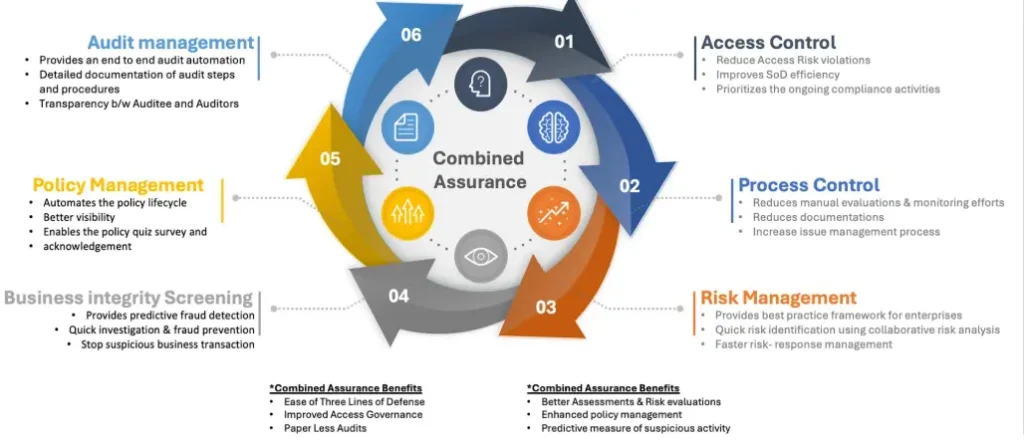
GRC 2026- COmbination of GRC & ACS in one Single Instance
Conclusion
The move toward combined assurance is essential for organizations seeking to navigate an increasingly complex risk and compliance landscape. SAP GRC 2026 is poised to be a game-changer, offering the tools and capabilities needed to break down assurance silos and drive integrated, effective governance. By embracing combined assurance within SAP GRC, organizations can enhance risk oversight, optimize resources, and build greater trust with stakeholders